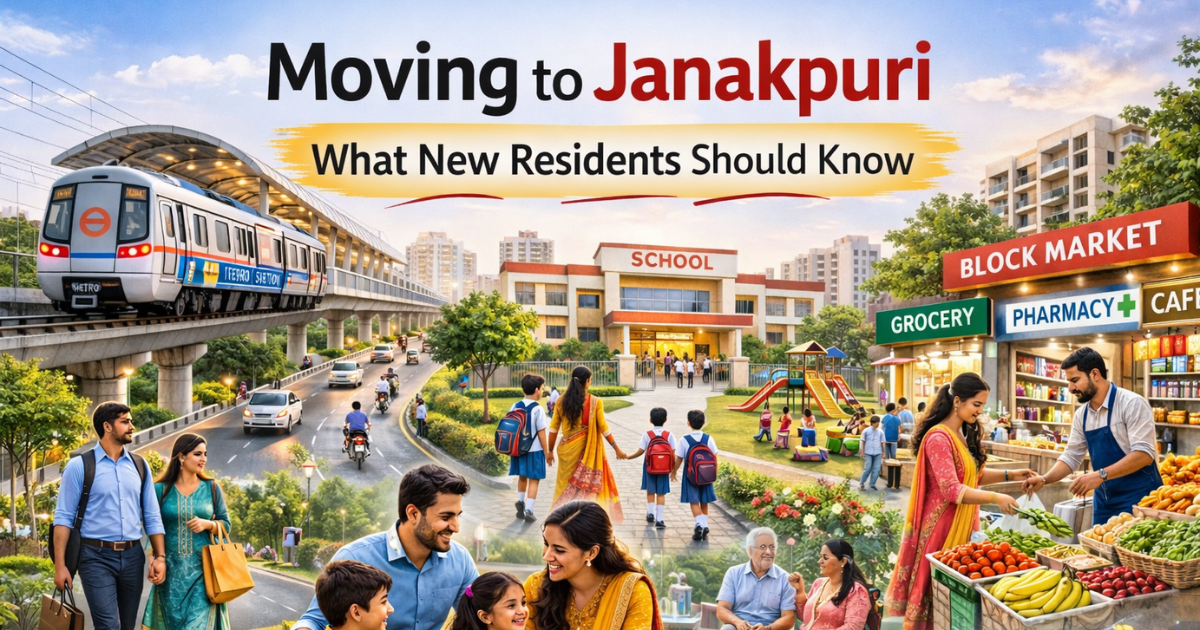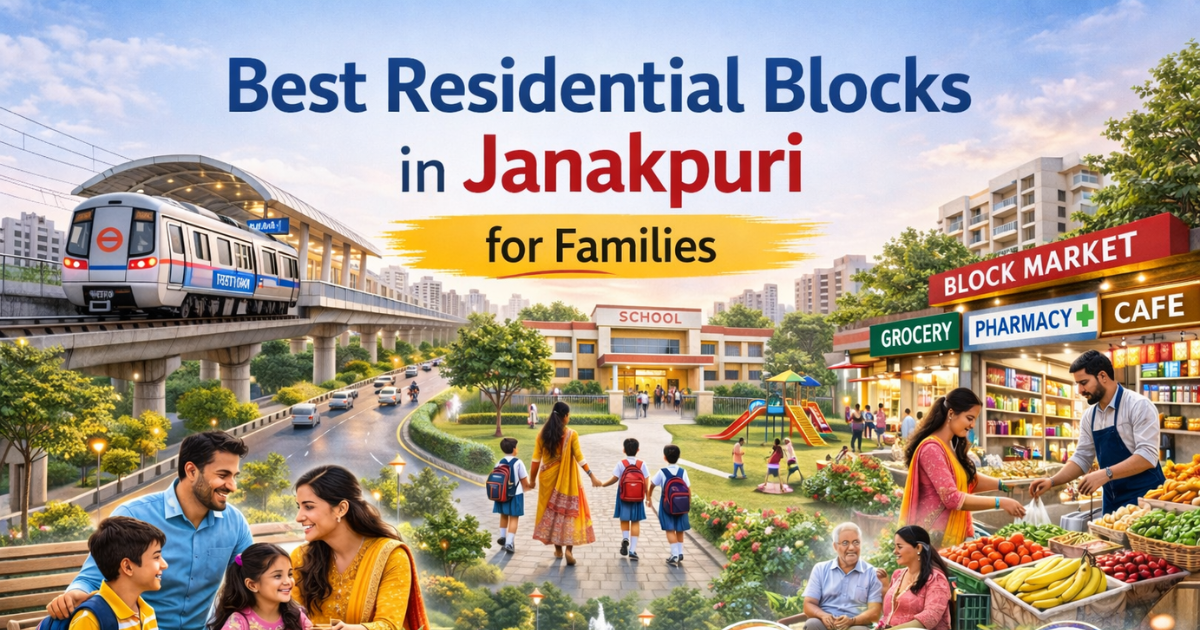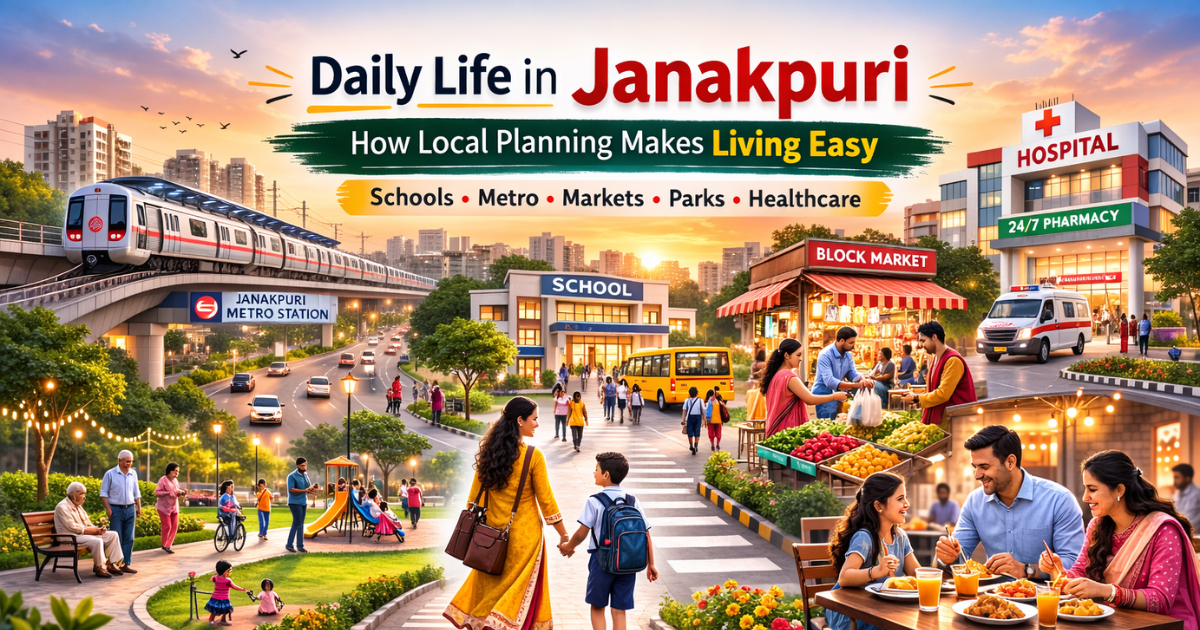
Daily life in Janakpuri reflects the benefits of thoughtful planning and balanced urban design. In a large and fast-moving city like Delhi, daily routines can often feel stressful due to long commutes, heavy traffic, and scattered facilities. However, Janakpuri offers a different experience. Here, residential blocks are supported by nearby markets, schools, parks, clinics, and metro connectivity, making everyday tasks more manageable.
Located in West Delhi, Janakpuri was developed as a planned residential area with self-sufficient block markets and integrated public spaces. This structure continues to shape how residents experience their day. Families can drop children to nearby schools without long travel times. Working professionals benefit from metro access that reduces commute stress. Senior citizens enjoy walkable parks and easy access to healthcare. Even daily errands such as grocery shopping or visiting a pharmacy can be completed within minutes.
In 2026, as lifestyle demands continue to grow, the convenience offered by Janakpuri stands out. Good road connectivity, reliable public transport, and accessible essential services contribute to smoother daily routines. The presence of active markets and community spaces also encourages social interaction, adding warmth to neighbourhood living.
This blog explores how local planning influences everyday comfort in Janakpuri. From morning walks and school runs to office commutes and evening market visits, we look at how infrastructure, connectivity, and community design combine to shape a practical and balanced lifestyle for residents.
Key Takeaways
-
Daily life in Janakpuri is supported by planned residential blocks and nearby essential services.
-
Schools, coaching centres, and parks are located within short distances, reducing travel stress for families.
-
Strong metro connectivity makes commuting easier for working professionals.
-
Local markets allow residents to complete daily errands conveniently.
-
Easy access to clinics and pharmacies improves healthcare availability.
-
Public parks and community spaces strengthen social interaction and quality of life.
-
Infrastructure improvements continue to enhance comfort and accessibility.
-
Thoughtful planning remains the foundation of Janakpuri’s everyday convenience.
Morning: A Calm and Organized Start
The day in Janakpuri often begins early. Around 6 a.m., parks across different blocks start filling with residents. Senior citizens walk in groups, practicing light exercises. Some residents gather for yoga sessions. Children play before school hours.
The presence of well-maintained parks within residential blocks reduces the need to travel for fresh air or exercise. Parents feel comfortable allowing children to play nearby because the parks are close to home.
Milk booths, small grocery shops, and fruit vendors open early. Residents pick up essentials during morning walks. This simple convenience saves time later in the day.
School Hours: Short Commutes and Less Stress
One of the biggest advantages of daily life in Janakpuri is access to nearby schools. Many families live within walking or short driving distance of educational institutions.
Parents do not have to wake children excessively early for long bus rides. School drop-offs are smoother because traffic inside residential blocks is manageable compared to major highways.
For older students, coaching centers are also located within the locality. This reduces travel time and allows better time management for studies and rest.
Local planning ensures that education facilities are integrated into residential life rather than being far away.
Office Commute: Metro and Road Connectivity
By 9 a.m., working professionals begin commuting. Metro stations in and around Janakpuri make travel easier for those working in other parts of Delhi.
Instead of driving long distances, many residents prefer metro travel, which is faster and more predictable. This reduces daily stress and fuel costs.
Road connectivity to nearby areas such as Vikaspuri, Uttam Nagar, and Rajouri Garden also supports smooth travel. Although traffic can increase during peak hours, overall accessibility remains strong.
Planning that combines residential areas with transport access improves work-life balance.
Midday: Markets and Essential Services
During midday hours, local markets become active. Homemakers, senior citizens, and small business owners visit markets for groceries, medicines, and household supplies.
Block markets in Janakpuri are designed to serve nearby homes. This means residents rarely need to travel far for daily essentials. Kirana stores, pharmacies, tailoring shops, and small eateries are all within reach.
The ability to complete daily errands within walking distance saves time and reduces dependence on vehicles.
Healthcare Accessibility During the Day
Healthcare facilities are spread across the locality. If someone feels unwell, a clinic is usually available nearby. Diagnostic centers and pharmacies are easily accessible.
This reduces anxiety, especially for families with children or elderly parents. Knowing that medical help is close by adds peace of mind to daily life.
Afternoon: A Balanced Routine
Afternoons in Janakpuri are relatively calm. Students return from school, and some head to tuition classes located nearby. Because coaching centers are within the locality, parents do not worry about long travel or safety.
Working professionals may return home for remote work or flexible schedules, supported by strong digital connectivity. Reliable internet has become part of daily infrastructure.
The structured layout of residential blocks helps maintain a quiet and organized atmosphere.
Evening: Markets, Parks, and Social Interaction
Evenings are the liveliest time in Janakpuri. Local markets see high footfall. Families step out for shopping, snacks, or small errands.
Street food vendors and small cafés become gathering spots. Neighbours meet, exchange greetings, and discuss daily matters.
Children return to parks for playtime. Senior citizens gather for evening walks. The presence of safe and accessible open spaces strengthens community bonding.
Unlike commercialized city centres, Janakpuri maintains a balance between activity and residential comfort.
Community Culture in Everyday Life
Daily life in Janakpuri is not limited to personal routines. Community interaction plays an important role.
Residential societies often organize small cultural events, meetings, or festival preparations. This creates familiarity among neighbours.
When people recognize each other, safety and trust increase naturally.
Convenience for Senior Citizens
Senior citizens benefit greatly from Janakpuri’s planning. Walkable markets, nearby clinics, and accessible parks reduce dependency on others.
Public transport options and short travel distances make daily tasks manageable.
This convenience supports independent living for elderly residents.
Convenience for Working Couples
Working couples appreciate time-saving aspects of the locality. Short school commutes, nearby markets, healthcare access, and metro connectivity simplify daily schedules.
The ability to manage multiple responsibilities within a compact area improves quality of life.
Role of Infrastructure in Daily Comfort
Road maintenance, drainage systems, and street lighting contribute to everyday comfort. Well-lit streets improve safety at night.
Drainage improvements reduce waterlogging during monsoon, allowing uninterrupted routines.
Infrastructure development may not always be visible daily, but it influences comfort and safety continuously.
Digital Convenience and Modern Living
Digital infrastructure supports online payments, food delivery, remote work, and online education.
Local businesses accept digital payments, reducing cash dependency.
Modern convenience blends with traditional neighbourhood culture.
Challenges in Daily Life
No locality is perfect. Traffic during peak hours and parking shortages in markets can create inconvenience.
Construction activities sometimes cause temporary disruptions.
However, these challenges are manageable compared to benefits.
Why Planning Matters
Janakpuri’s original planning plays a major role in shaping daily convenience. The integration of residential blocks with markets, schools, parks, and healthcare ensures balanced living.
Unlike areas that grew without structure, Janakpuri’s design continues to support comfortable routines decades later.
The Emotional Side of Convenience
Convenience is not only about distance, it is about peace of mind. When daily tasks are manageable, stress levels reduce.
Residents feel secure knowing that schools, clinics, markets, and parks are nearby.
This emotional comfort adds to overall satisfaction.
The Future of Daily Life in Janakpuri
As infrastructure continues to improve, daily life may become even smoother. Smart traffic systems, improved parking solutions, and better public facilities could enhance comfort further.
Community participation will remain important in maintaining cleanliness and order.
Conclusion
Daily life in Janakpuri reflects the benefits of thoughtful planning. From morning walks to evening market visits, residents experience convenience at every step.
Short commutes, accessible services, and strong community culture make everyday living efficient and comfortable.
In 2026, Janakpuri continues to offer something valuable in a busy city, balance. The locality proves that good planning can shape not just buildings and roads, but the rhythm of daily life itself.